
Call For Consultation

Call For Consultation
Who's Liable for Damages in a Self-Driving Car Accident?
- posted: Mar. 06, 2024
- Criminal & Traffic Defense, Auto Injury
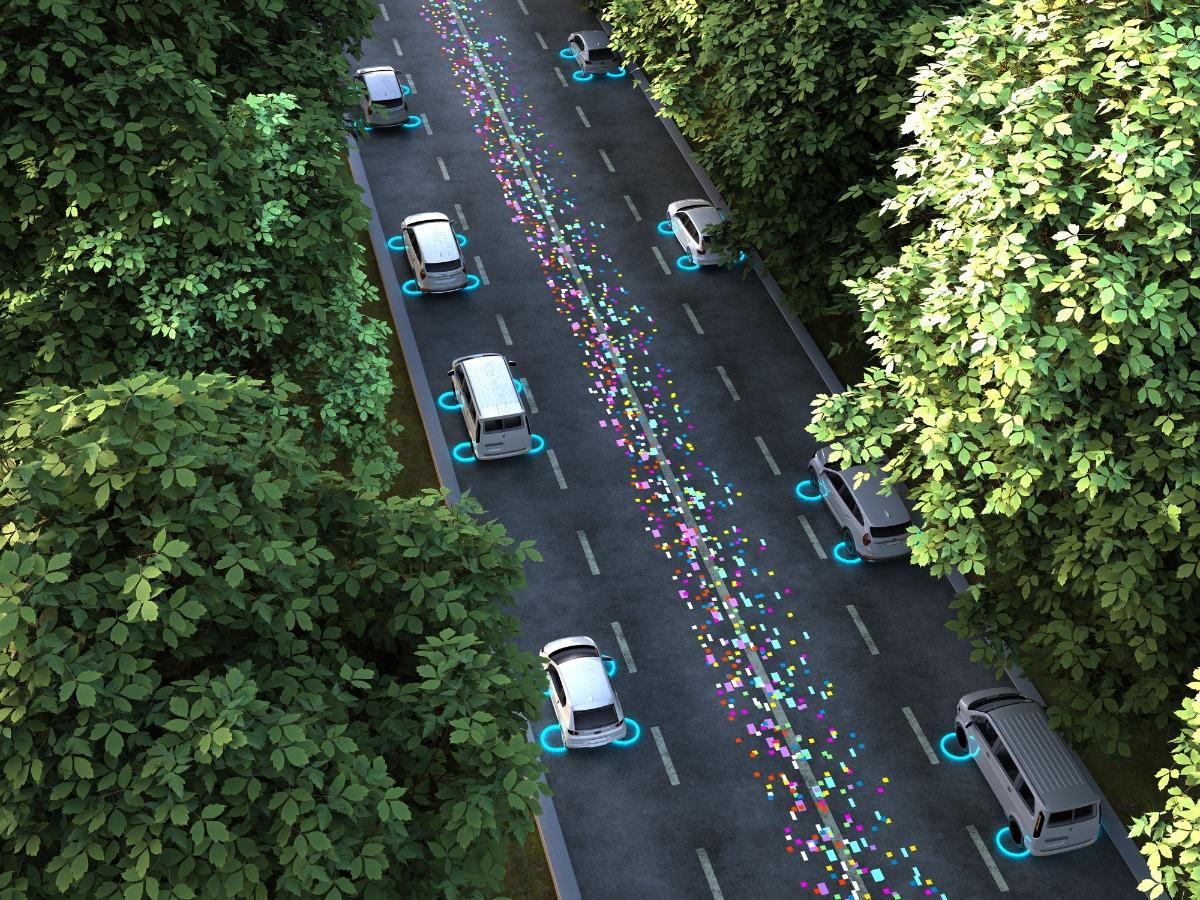
Self-driving cars — also called autonomous vehicles (AVs) — are starting to become a presence on the roads. There are an estimated 1,400 or more vehicles in the U.S. that can operate without a human driver’s control. Many more have partial automation, such as advanced driving assistance systems (ADAs) that can take over steering, acceleration and braking in certain situations. When these vehicles get into accidents, assessing liability for damages can be complicated.
Under current law, blame for an AV accident can fall upon any of the following parties:
Human operator — Most currently available AV models require a human operator to be present and ready to take over the controls. This “conditional automation” pairs ADAs with artificial intelligence to handle complex situations. The human operator’s action or inaction can be a major factor. Negligence, such as the operator failing to take over when necessary, could create liability.
Vehicle manufacturer — A manufacturer bears responsibility for ensuring its vehicles are safe and free of defects. A malfunction in the vehicle's hardware, software or design might directly contribute to the accident, such as from faulty sensors or software bugs that caused the car to behave unexpectedly. In such cases, the manufacturer could be subject to a product liability claim.
Technology designer — The company that developed the self-driving technology can also play a role. If the accident stems from flaws in the software's programming, inadequate safety measures or failure to anticipate certain road scenarios, the technology designer could be liable on a product liability or negligence basis. Proving such a claim involves demonstrating that the technology deviated from established safety standards or contained inherent design flaws.
Other drivers, vehicles and road hazards — As with any accident, there can be third parties at fault in an AV crash. These can include the driver of another vehicle involved in the crash. Pedestrians, motorcyclists and bicyclists may likewise be involved. In addition, road hazards like potholes or debris can contribute to causing the accident.
In many cases, more than one party might share responsibility. For instance, if the accident resulted from a combination of a software malfunction and the human operator's delayed response, both the technology designer and the operator could be held partially liable. Connecticut’s comparative negligence rule allows for recovering damages from each defendant according to their degree of fault, as long as the victim is not more than 50 percent negligent.
As self-driving vehicles reach higher levels of automation, the equation for the human operator’s degree of fault may change. This could result in amendments to insurance laws so that victims can recover damages without having to prove actual negligence. Until then, victims need to make the strongest case possible that human error contributed to the accident. An experienced Connecticut automobile accident attorney can be indispensable in this regard.
Gesmonde, Pietrosimone & Sgrignari, L.L.C. in Hamden and East Haven advocates on behalf of car crash victims throughout Connecticut. To discuss your case, please call 203-745-0942 or contact us online.
- Business & Contracts (28)
- Covid19 (16)
- Criminal & Traffic Defense (27)
- Elder Law (26)
- Finance (3)
- Firm News (5)
- Foreclosures (2)
- Injury & Accidents (58)
- Insurance Law (18)
- Labor & Employment (61)
- Product Liability (1)
- Personal Injury (72)
- Family Law (1)
- Bankruptcy (1)
- Auto Injury (16)
- Estate Planning (11)
- Workers Rights (1)
- Business Law (2)
- Wills and Probate (1)
- Truck Accidents (7)
- Divorce (1)
- Employment (5)
- Auto Accident (10)
- Pedestrian accidents (1)
- Dog bites (2)
- Bicycle Accidents (2)
- Nursing Home (1)
- Catastrophic Injury (2)
- Legislative (1)
- Wrongful Death (1)
- Auto accident (3)
- Slip and fall (5)
- Motorcycle accidents (4)
- Public entity lawsuits (1)
- Estate planning (3)
- Burn injuries (2)
- Nursing home injury (1)
- Premises Injury (2)
- Employment Law (3)
- Automobile Injury (3)
- Pool Injury (1)
- Work Injury (1)
- Sidewalk Injury (1)
- Firearms Injuries (1)
- Mediation (1)
- Attorney-Client Privilege (1)
- Traumatic Brain Injuries (1)
- E-Bike (1)
- Landlord & Tenant (7)
- Litigation (38)
- Medical Malpractice (8)
- Municipal Law (3)
- Real Estate (50)
- Supreme Court Rulings (5)
- Trusts, Estates, Wills & Probate (34)
- Workers' Compensation (12)
- Zoning, Planning & Land Use (3)
Contact Us
Please tell us about your legal matter and a member of our staff will contact you.
Map & Directions

Gesmonde, Pietrosimone & Sgrignari, L.L.C. is located in Hamden, CT and serves clients in and around North Haven, Hamden, Waterbury, Bethany, Milford, Wallingford, Prospect, Woodbridge, Northford, Madison, Beacon Falls, Branford, Cheshire, North Branford, East Haven, Naugatuck, Meriden, Ansonia and New Haven County.
Attorney Advertising. This website is designed for general information only. The information presented at this site should not be construed to be formal legal advice nor the formation of a lawyer/client relationship. [ Site Map ]
See our profiles at Lawyers.com and Martindale.com
Martindale-Hubbell and martindale.com are registered trademarks; AV, BV, AV Preeminent and BV Distinguished are registered certification marks; Lawyers.com and the Martindale-Hubbell Peer Review Rated Icon are service marks; and Martindale-Hubbell Peer Review Ratings are trademarks of MH Sub I, LLC, used under license. Other products and services may be trademarks or registered trademarks of their respective companies. Copyright © 2026 MH Sub I, LLC. All rights reserved.
